
Sustainable Fodder Initiative: A Landmark Step for Gaumata
Sustainable Fodder Initiative: A Landmark Step for Gaumata
Napier CO-4 Grass and Australian Pink Grass Cultivation at Pahadpur Gaushala
Feeding the hungry—whether human or animal—is the purest form of service. True Gau Sewa begins with one essential act: ensuring that every Gaumata, especially abandoned and shelterless cattle, never sleeps on an empty stomach. A nourished cow is a healthy and content cow. No matter how advanced a Gaushala project is or how beautiful its infrastructure appears, if the cow’s stomach remains empty, every other service loses meaning.
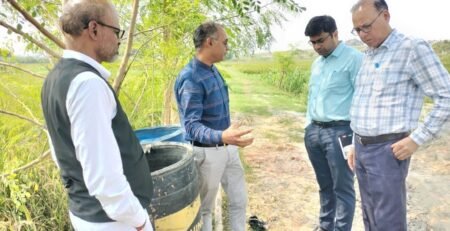
Recognizing this truth, Pahadpur Gaushala has launched a pioneering sustainable fodder production initiative by planting Napier CO-4 Grass and Australian Pink Grass. This effort aims to create a reliable, nutrient-rich, and locally grown fodder supply for long-term cow care.
Napier CO-4 Grass: The Backbone of Fodder Security
Napier CO-4 Grass is a high-yield hybrid fodder variety developed for tropical and subtropical regions, making it ideal for Indian Gaushalas and dairy farms. It offers several advantages:
- Contains approximately 21% crude protein, supporting better digestion and milk yield.
- Produces 250–300 tonnes of fresh green fodder per hectare annually.
- Regrows fast and can be harvested multiple times a year.
- Improves soil fertility, making it useful for organic and sustainable agriculture.
This makes Napier CO-4 Grass cultivation a practical and profitable solution for Gaushala management and small-scale farmers aiming for livestock sustainability.
Australian Pink Grass: Balanced Protein for Healthy Cattle
Australian Pink Grass complements Napier CO-4 with its superior adaptability and high nutritive value.
- Contains around 18% protein with essential minerals and fibers.
- Enhances cow health, immunity, and milk quality.
- Thrives in different soil types, making it easy to grow on community lands, canal banks, or parks.
By combining Australian Pink Grass and Napier CO-4 Grass, Gaushalas can maintain continuous green fodder availability year-round.
Gaushala Project for Self-Sufficiency
In India, over 5,000 registered Gaushalas struggle regularly to feed shelter cattle. The Pahadpur Gaushala project demonstrates how fodder self-reliance can be achieved by cultivating modern grass varieties on idle and unused lands.
This sustainable fodder model encourages:
- Government and private Gaushalas to use uncultivated land effectively.
- Panchayats and volunteers to join hands in local fodder production.
- Integration of Gaushalas into India’s organic and natural farming movements.
When each community grows its own cow fodder, we take a real step toward ending hunger and promoting ecological balance.
Community Inspiration and Gratitude
This noble initiative was made possible through the guidance and motivation of Shri Ashish Ji, Shri Lalkrishna Dubey Ji, and the AVN Gaushala Committee. Their involvement reflects the spirit of teamwork, compassion, and dedication toward the welfare of Gaumata.
Their work shows that sustainable Gaushala management is not just about comfort—it’s about nourishment, balance, and care.
A Vision for the Future
Under the Vish Mukt Vishwa (Poison-Free World) campaign, Pahadpur’s model aims to develop self-sufficient Gaushalas and zero-waste agro-systems across Uttar Pradesh and beyond. Cultivating Napier CO-4 and Australian Pink Grass on roadside areas, canal banks, barren fields, and village parks ensures continuous fodder supply and reduces government burden.
By focusing on feeding first, this project sends a powerful message:
Real service begins where hunger ends.



Leave a Reply