The Return of Seeds: Reclaiming Our Bond with Nature through Psychology & Ecological Engineering
The Return of Seeds: Reclaiming Our Bond with Nature through Psychology & Ecological Engineering
— By Rakesh Kumar Pandey, Psychologist & Engineer
Human civilization was born in the lap of nature — among forests, mountains, rivers, and wild landscapes that nurtured life long before agriculture existed. From these untouched ecosystems, we received nature’s greatest gifts: fruits, flowers, vegetables, vines, herbs, and countless plant species that sustained not only humans, but birds, insects, animals, and the entire web of life.
With time, humans gathered these plants from their natural habitats and confined them within man-made boundaries — fields, farms, gardens, and controlled spaces. As convenience grew, biodiversity shrank.
Nature’s balance slowly began to break.
Today, while the Earth battles ecological instability, we are beginning a powerful and healing tradition — the return of seeds to their original homes.
🌱 Why We Scatter Seeds Back into Nature
Seeds thrive where human interference is minimal and natural cycles remain undisturbed.
Forests, riverbanks, mountain slopes, abandoned lands, and wild soil pockets are the true homes of seeds.
When we take the everyday seeds from our kitchens — from fruits, vegetables, flowers, or homegrown cuttings, rootings, and grafts — and return them to natural landscapes, we are not merely planting vegetation.
We are restoring nature’s lost diversity.
This simple act reconnects cultivated species with the ecosystems where they evolved. It allows natural regeneration to happen freely — without irrigation, fertilizers, or human supervision.
This is rewilding, a gentle ecological revolution.
🐦 Nature as Our Co-Farmer: Birds, Ants, Squirrels & the Wind
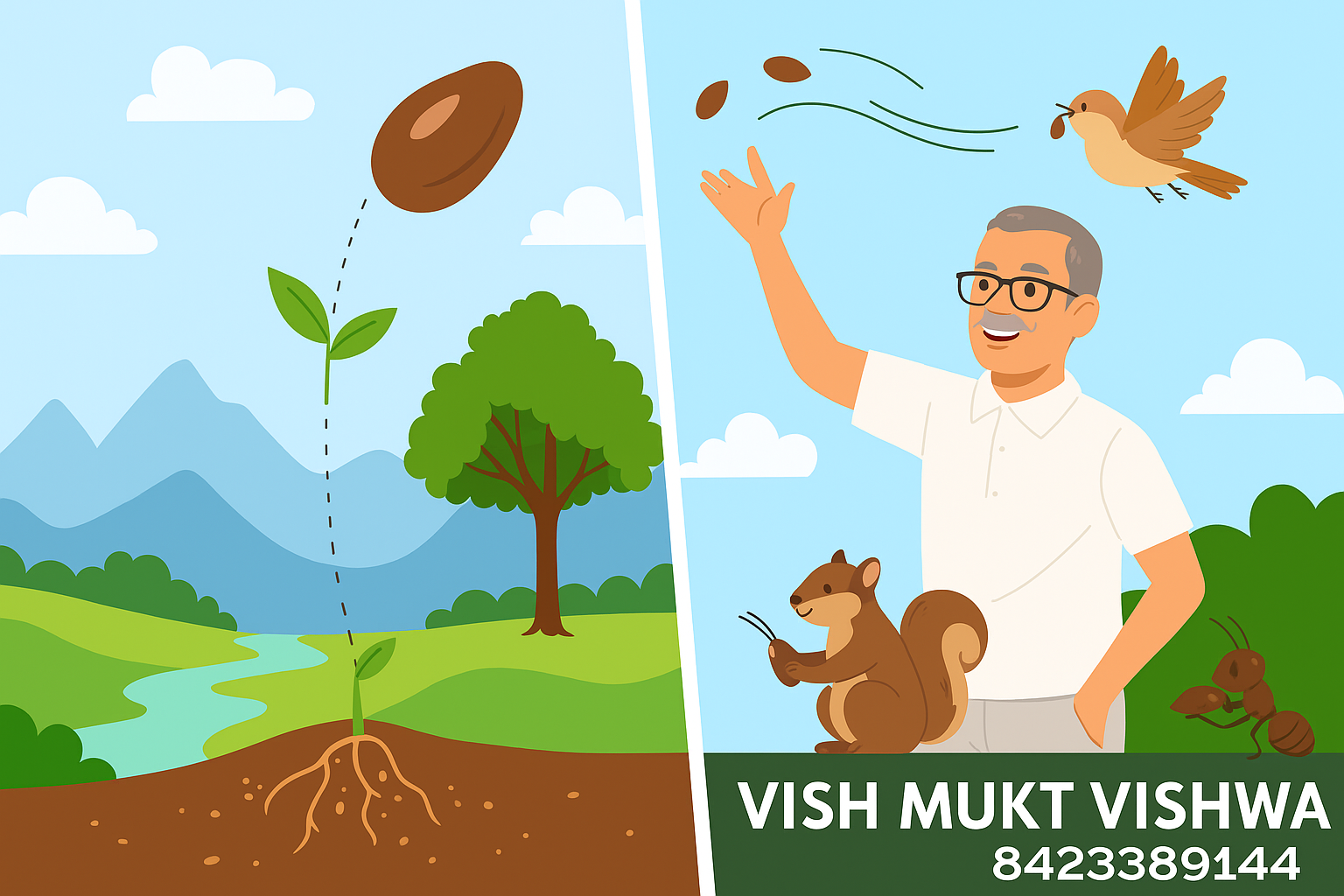
In this movement, our silent collaborators are not humans but nature’s own workforce — birds, ants, squirrels, insects, butterflies, and even the wind.
They carry seeds farther than any human can.
They drop them into fertile corners we may never find.
They protect and nourish them without instruction.
Together, we are enabling a subtle yet powerful transformation —
the Seed-Scattering Revolution.
🌿 A Psychological Perspective: Healing the Mind through Seed Scattering
As a psychologist, I view seed scattering not just as ecology — but as a deeply therapeutic practice.
Each time we scatter a seed:
- We reconnect with the Earth’s grounding energy.
- We release stress, anxiety, and emotional tension into the soil.
- We revive the creative energies of the subconscious mind.
- We awaken the inner child — the part of us that still believes in growth and miracles.
- We create a meaningful ritual that restores emotional balance.
Seed scattering is not a hobby.
It is action-based therapy, nature-driven mindfulness, and emotional renewal.
🌍 An Engineering Vision: Rebuilding Earth’s Ecological Infrastructure
From an engineering viewpoint, this is not simply plantation — it is the reconstruction of the planet’s natural infrastructure.
Through seed rewilding, we are:
- Increasing biodiversity
- Enhancing soil fertility
- Strengthening ecological networks
- Reviving pollinators
- Supporting natural water cycles
- Restoring micro-habitats and climate resilience
This is a long-term environmental investment — one that will benefit generations that have not even been born yet.
🌻 How You Can Join the Seed-Return Movement
Your home already has everything you need:
- Seeds from vegetables and fruits
- Dried seed pods from household plants
- Cuttings, rootings, and grafts
- Natural wild seeds from your garden or surroundings
Do not throw them away.
Carry them with you and scatter them at:
- Riverbanks
- Old gardens
- Hill paths
- Farmlands edges
- Forest borders
- Natural open grounds
- Abandoned patches of soil
One small seed becomes a plant, then a tree, and someday becomes part of a forest — quietly breathing for the Earth long after we are gone.
🌱 This Is a Collective Duty — Not an Individual Task
Seed rewilding is not just my mission or yours — it is a universal responsibility.
Scatter seeds.
Educate children.
Inspire others.
Become part of Earth’s renewal.
Because when we scatter seeds, we plant hope.
And when we regrow nature, we rebuild the future.

Leave a Reply